
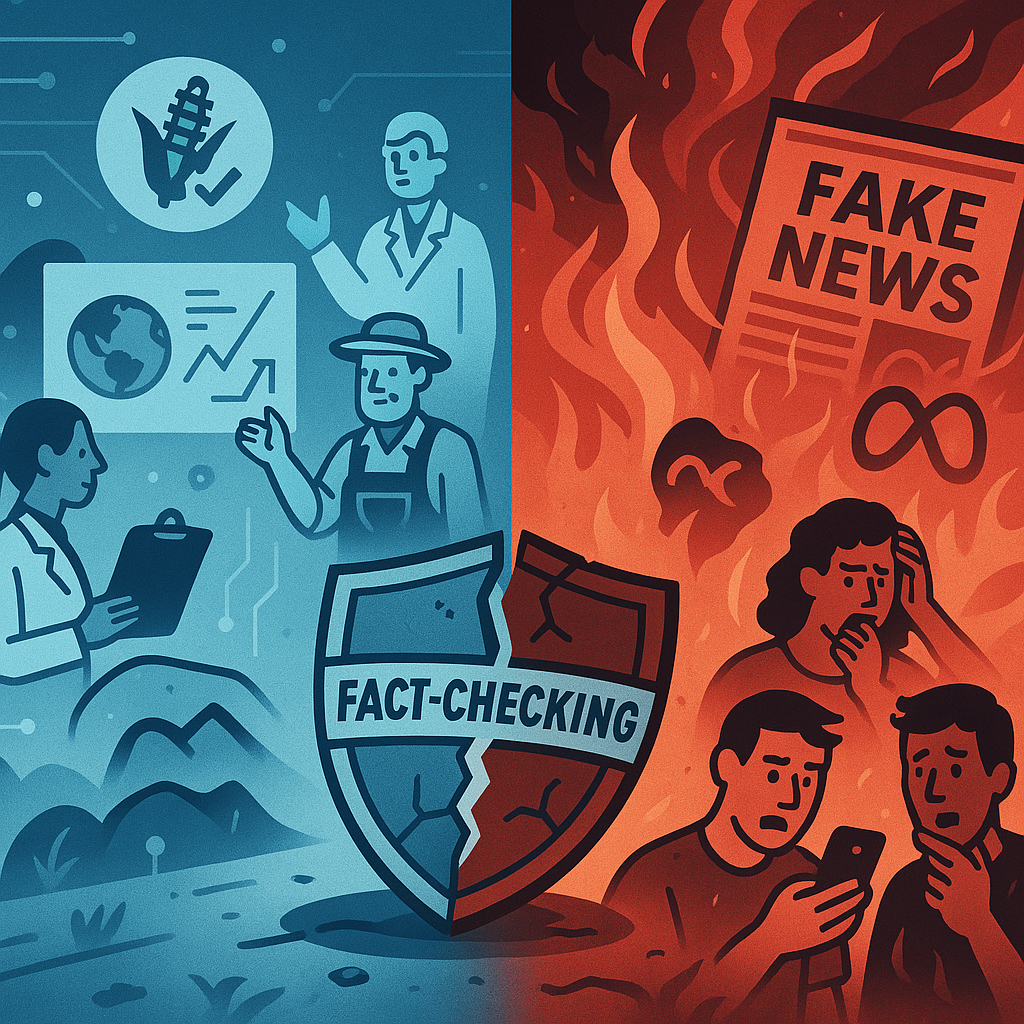
Meta Ended Fact-Checking. What That Means for Climate and Food Misinformation
Meta Ended Fact-Checking. What That Means for Climate and Food Misinformation
By Nasir Khan
In April 2025, Meta (the company behind Facebook, Instagram, and Threads) officially ended its U.S.-based fact-checking program. This decision wasn’t secret, Meta announced it earlier this year, but now that it’s happened, we’re starting to see the consequences.
Instead of using professional fact-checkers to review false or misleading content, Meta has switched to a new system where users can add “context” notes to posts. These notes are voted on by other users. If enough people agree that the note is helpful, it becomes visible.
Meta says this gives people more control over the information they see. But here’s the issue: this change makes it much easier for false information to spread — especially about climate change and food systems.
Why Climate and Food Misinformation Spreads So Easily
Climate change and agriculture are complicated topics. They involve science, government policies, global trade, and personal lifestyle choices. That makes them easy targets for misinformation, especially when people are worried about their food, land, or future.
One common example of false or misleading claims that go viral online is “Climate change is a hoax to control what we eat.”
These kinds of posts often spread quickly because they tap into fear and frustration. They may contain a grain of truth, but they twist the facts or leave out important context.
Before April 2025, Meta had a system where independent fact-checkers could label this kind of content as misleading and limit how far it spread. That system is now gone.
What Replacing Fact-Checkers with “Community Notes” Means
The new system puts fact-checking in the hands of users. In theory, this sounds more democratic. But in reality, it’s risky.
Here’s why:
- Anyone can suggest a correction, but there’s no guarantee it’s based on facts or science.
- Posts only get corrected if a large group of people vote the same way, so truth becomes a popularity contest.
- Complex topics like climate policy or food production can’t always be explained in a short note.
As a result, many misleading posts may not get corrected at all, or worse, they might get liked or shared even more.
What Could Happen Next
With no professional fact-checkers reviewing posts, we may see:
- More viral falsehoods about climate solutions, food shortages, or farming policies.
- Conspiracy theories spreading unchecked, like claims that global climate goals are secretly about population control or land grabs.
- Less trust in real scientific research, as platforms no longer signal what’s verified and what’s not.
We’ve already seen how false claims about fertilizer bans or “globalist agendas” can lead to protests and political backlash, especially in Europe and North America. Now that Meta has stepped back, we expect these kinds of narratives to spread even faster.
Why This Matters
Climate change is real, and the way we grow, eat, and trade food is a big part of the solution. But real progress depends on people having access to accurate information.
If social media is flooded with fear, doubt, and misleading content, it becomes much harder for:
- Farmers to make informed decisions.
- Policymakers to introduce fair, science-based rules.
- Everyday people to understand what’s actually happening to our food and planet.
When a company as large as Meta steps away from fact-checking, the burden of truth falls on all of us, journalists, researchers, educators, and communities.
What We Can Do
Now that Meta has removed its professional fact-checking system, it’s more important than ever to:
- Stay alert to false or misleading posts, especially on Facebook and Instagram.
- Support independent news and research that explain climate and food issues clearly.
- Share accurate, evidence-based information with your own networks, it still makes a difference.
At University of Guelph, Canada, we’re tracking how climate and food misinformation is evolving in this new environment. We’ll keep sharing tools, updates, and verified facts, because truth still matters.
